Anti-spam law
Updated September 30, 2026
In one sentence
An anti-spam law sets the rules for sending promotions by email or text. It protects people from messages they didn’t ask for.

Three rules that keep coming back
From one country to another, the same rules often come back: get the person’s agreement, say clearly who is sending the message, and offer a simple way to unsubscribe. The European Union, the United Kingdom, Canada and Australia generally require consent before sending. There are narrow exceptions, for example for a customer who already bought a similar product. The United States doesn’t require prior consent for email. But the sender must identify themselves, give a postal address and apply unsubscribe requests within 10 business days.
What it changes for your card
A customer who adds your card to their phone isn’t agreeing to your promotions. Offer a separate box, never pre-checked, and keep the date and the text that was accepted. Every message must then say who is sending it and how to unsubscribe.
Every country has its own rules
Penalties, exceptions and deadlines vary. Check the rules in the country where your customers live, and in the country where your business is based.
At sign-up, a nail salon offers an unchecked box: “Get the salon’s offers by email.” Every email sent afterwards carries the salon’s name, its address and a link to unsubscribe.
Sources
- European Union, Directive 2002/58/EC on privacy and electronic communications, Article 13 (EUR-Lex) (opens in a new tab)eur-lex.europa.eu
- ICO (United Kingdom), rules on electronic mail marketing (opens in a new tab)ico.org.uk
- CRTC (Canada), guidance on commercial electronic messages (opens in a new tab)crtc.gc.ca
- ACMA (Australia), “Avoid sending spam” (opens in a new tab)acma.gov.au
- FTC (United States), CAN-SPAM Act compliance guide (opens in a new tab)ftc.gov
General information, not legal advice. Rules differ from one country to another and change over time: for your situation, consult a legal professional.
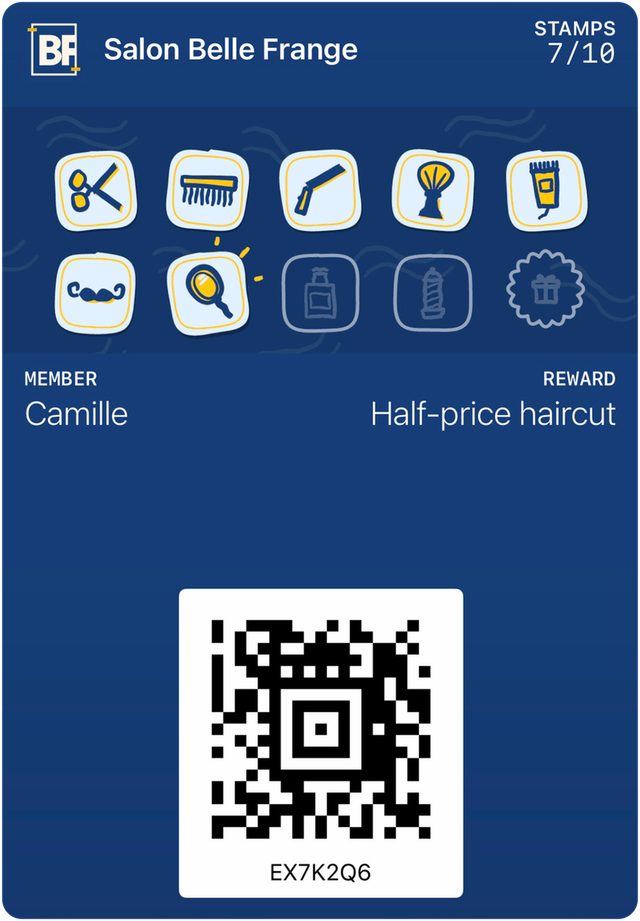
See your business’s card
Send us your logo: we prepare a preview of your card and show it to you on video.