Neighborhood gift card
Updated September 30, 2026
In one sentence
A neighborhood gift card can be spent at every member business on the same street or in the same business association, rather than at just one business.

How it works
A customer buys a card for a set amount and gives it as a gift. The person who receives it spends it in one or several goes, at any registered business. The money stays in the neighborhood instead of going to a big chain. The Town & City program, for example, is a prepaid card accepted only at registered businesses.
Rules to check
Consumer protection laws often cover gift cards, and the rules vary. In the United States, a gift card must stay valid for at least 5 years. In Australia, it’s at least 3 years for a card sold since November 1, 2019. In Ontario, Canada, most gift cards can’t expire. The card’s gift cards have no expiry date and no activation fee, as several consumer protection laws require.
Gift card or loyalty card
A gift card holds money paid in advance. A loyalty card rewards visits. The two work together: a gift card brings in a new person, and the loyalty card gives them a reason to come back.
The “Quartier Tournesol” association (an invented name) sells a $50 gift card valid at its 25 businesses. A customer gives it to her sister, who spends $20 at the bakery and $30 at the florist.
Sources
- Miconex, “Town & City Gift Cards” (opens in a new tab)mi-cnx.com
- CFPB (United States), Regulation E, section 1005.20 (opens in a new tab)consumerfinance.gov
- ACCC (Australia), gift cards and discount vouchers (opens in a new tab)accc.gov.au
- Government of Ontario (Canada), buying or using gift cards (opens in a new tab)ontario.ca
General information, not legal advice. Rules differ from one country to another and change over time: for your situation, consult a legal professional.
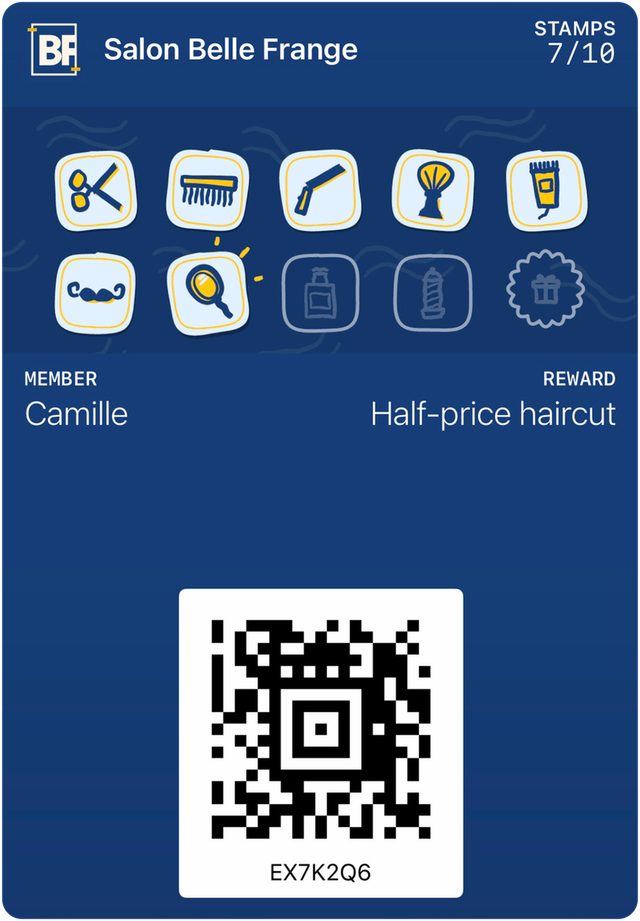
See your business’s card
Send us your logo: we prepare a preview of your card and show it to you on video.