Tiered loyalty program
Updated September 30, 2026
In one sentence
A tiered program sorts your customers into levels, for example Regular then VIP. The more a customer visits or spends, the higher they go, and the more benefits they get.

How it works
You set a goal over a period, for example 8 visits in 12 months. A customer who reaches it moves up a level, and their status shows on their card. In a small business, the best benefits are often signs of attention rather than discounts: a reserved slot, first taste of something new, an invitation to an evening event.
What research says
Two marketing studies help you set your levels well. According to Drèze and Nunes (2009), a top level feels more prestigious when there is an intermediate level below it. But it loses prestige when it has too many members. According to Wagner, Hennig-Thurau and Rudolph (2009), a customer who drops a level reports lower loyalty than a customer who never moved up.
For a small business
One or two levels are enough. Before launch, decide how a customer keeps their status. Warn them before they lose it: taking it away suddenly does more harm than never giving it.
A barbershop creates a “Regular” status from 8 haircuts in 12 months. Regulars get first pick of Saturday morning slots. They keep the status as long as they come back at least 6 times a year.
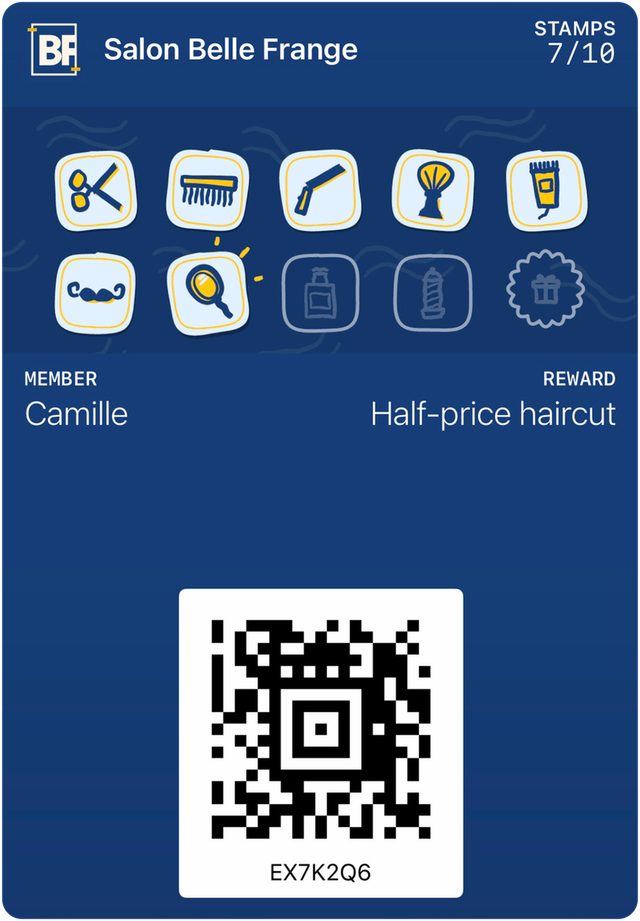
See your business’s card
Send us your logo: we prepare a preview of your card and show it to you on video.